You log in, scroll through endless files, and everything feels the same — outdated content, poor design, and products you’d hesitate to even give away for free… let alone sell.
And that’s the real problem.
Creating digital products from scratch takes time. Weeks, sometimes months. But relying on cheap PLR often means sacrificing quality — which defeats the whole point if you’re trying to build something real.
So naturally, platforms like Entrepedia sound appealing.
Done-for-you products. Ready to use. Sell, rebrand, or give away.
But here’s the real question:
Is this actually different… or just another repackaged PLR library?
In this review, I’m going to break it down properly — what you actually get inside, how the products look, and whether you could realistically use this to build something or make money.
I’ll also show a few real examples from inside the platform so you can see exactly what you’re getting.
What Is Entrepedia?
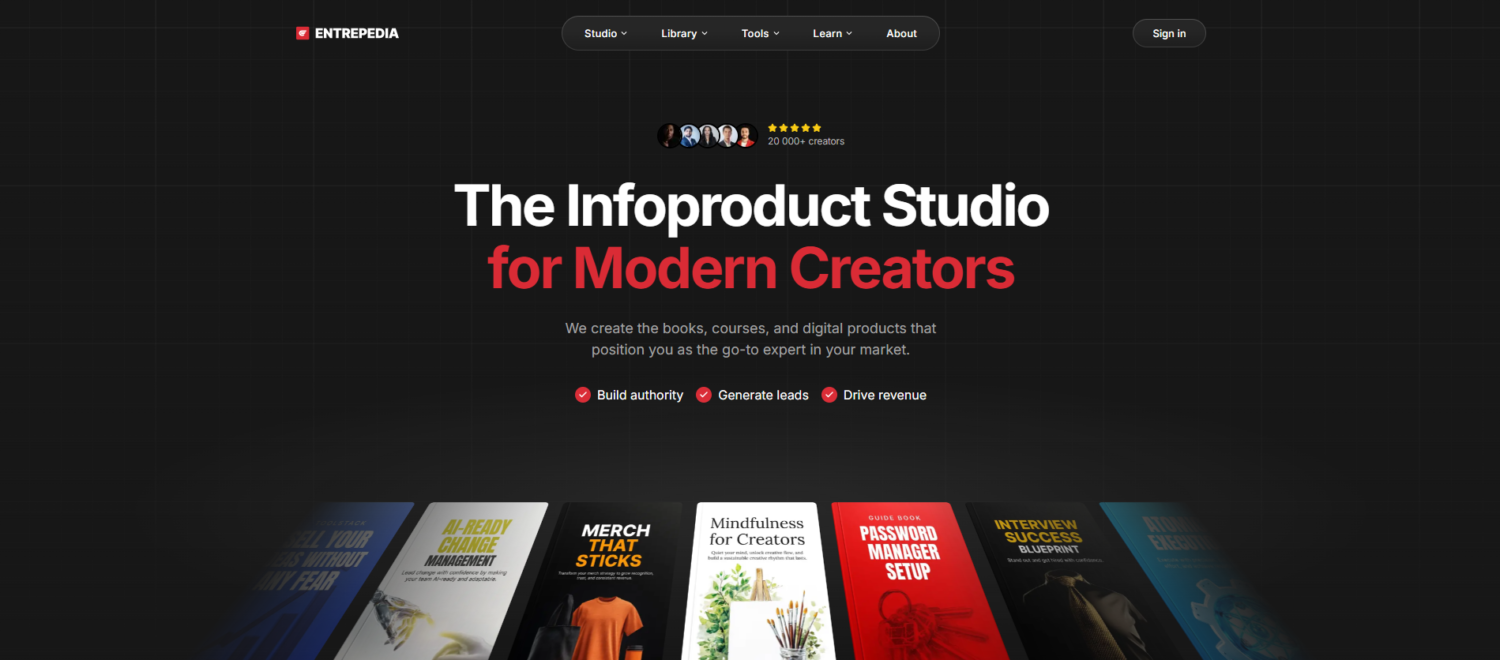
At a basic level, Entrepedia is a platform that gives you access to ready-made digital products you can use as your own.
But it’s important to understand this properly:
It’s not just another PLR website.
Most traditional PLR platforms simply give you files — ebooks, PDFs, maybe a few templates — and leave you to figure out the rest.
Entrepedia takes a different approach.
It’s closer to a done-for-you digital product system.
Inside, you get access to a large library of products across multiple formats — ebooks, workbooks, email courses, prompt packs, templates, and more. These aren’t just random files either. They’re structured, designed, and built with actual use in mind.
On top of that, there’s also a custom product service, where you can submit an idea and have a full product created for you from scratch.
So instead of starting with a blank page, you’re starting with something that already exists — something you can edit, rebrand, and use immediately.
And that’s really the core idea here:
👉 You’re not starting from zero — you’re starting with something already built.
These products can then be used in different ways:
- sell them as your own products
- use them as lead magnets
- include them in courses or coaching
- build authority in your niche
So rather than just giving you content, Entrepedia is essentially giving you the building blocks to create and launch digital products much faster.
Quick Overview
| Feature | Details |
|---|---|
| Product Library | 1,000+ digital products |
| Formats | 15+ (ebooks, workbooks, email courses, templates, prompts, etc.) |
| Access Model | One-time payment (no subscription) |
| License | Full Private Label Rights (sell, edit, rebrand, keep 100% profit) |
| Updates | New products added weekly |
| Collections | Pre-built bundles (ready-made offers) |
| Tools Included | Ideator, title generator, rebrander, description writer, calculator |
| Training | Digital Product University (how to use & sell products) |
| Best For | Creators, coaches, digital product sellers |
If you’re not sure yet, you can test it yourself by creating a free account and downloading one product for free.

What You Get Inside Entrepedia
Once you get access, you’re not just looking at a few downloadable files. The platform is structured in a way that actually helps you move from idea → product → offer much faster.
Here’s what you’re working with:
Product Library
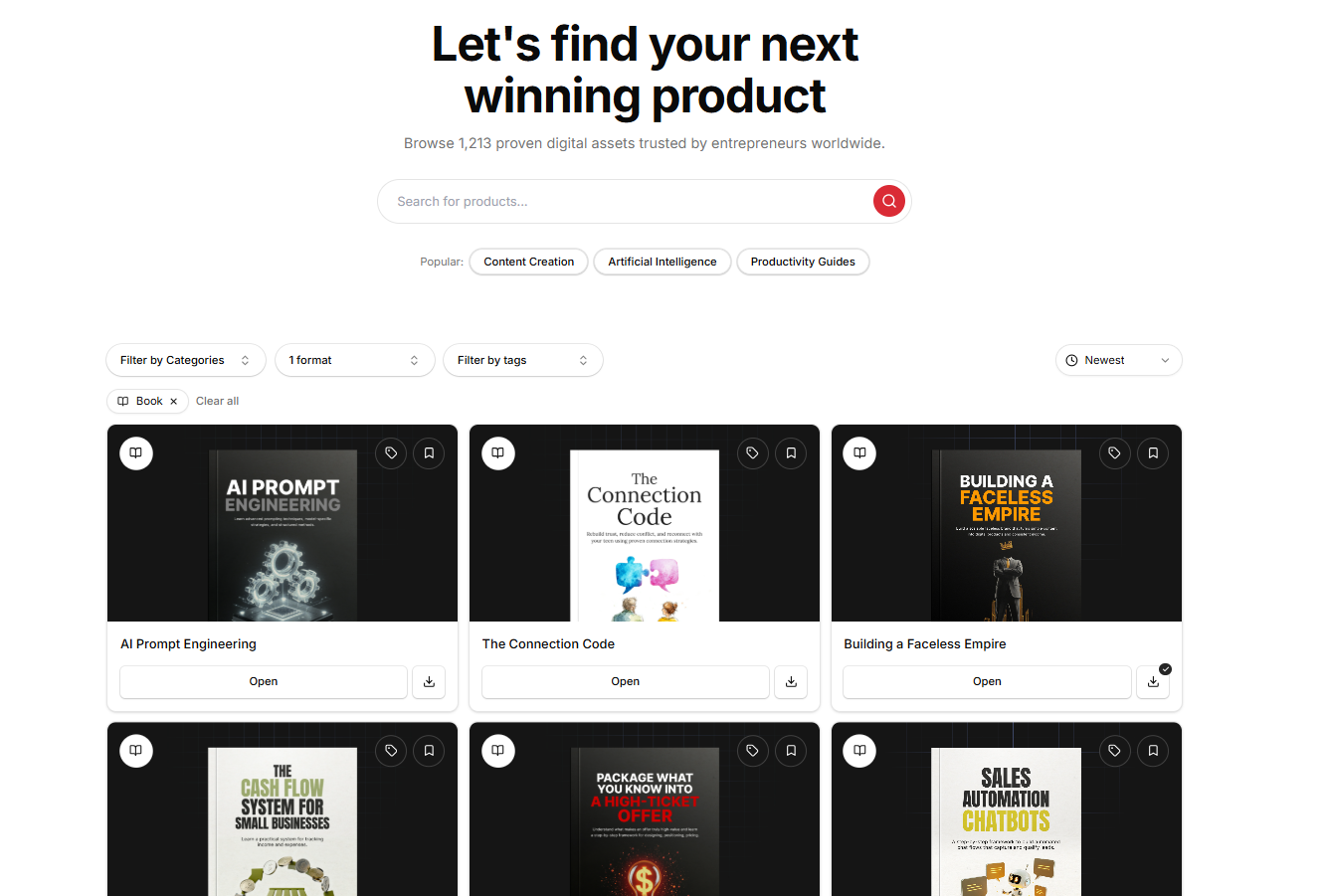
At the core of Entrepedia is its main library.
You get access to:
- 1,000+ digital products
- 15+ formats, including:
- ebooks
- workbooks
- checklists
- email courses
- prompt packs
- templates and more
The important part here is not just quantity.
These products are:
- structured (not random documents)
- designed for real use cases
- built around business, marketing, and monetization topics
So instead of asking “what should I create?”, you’re picking something that’s already done and adapting it.
Collections (Pre-Built Bundles)
This is one of the more underrated features.
Instead of downloading single products, you can access:
- pre-made collections (bundles)
- multiple assets grouped under one topic
For example:
- ebook + workbook
- checklist + prompts
- supporting materials
👉 This removes a big step most people struggle with: building an actual offer
You’re not piecing things together manually — it’s already packaged.
Built-in Tools
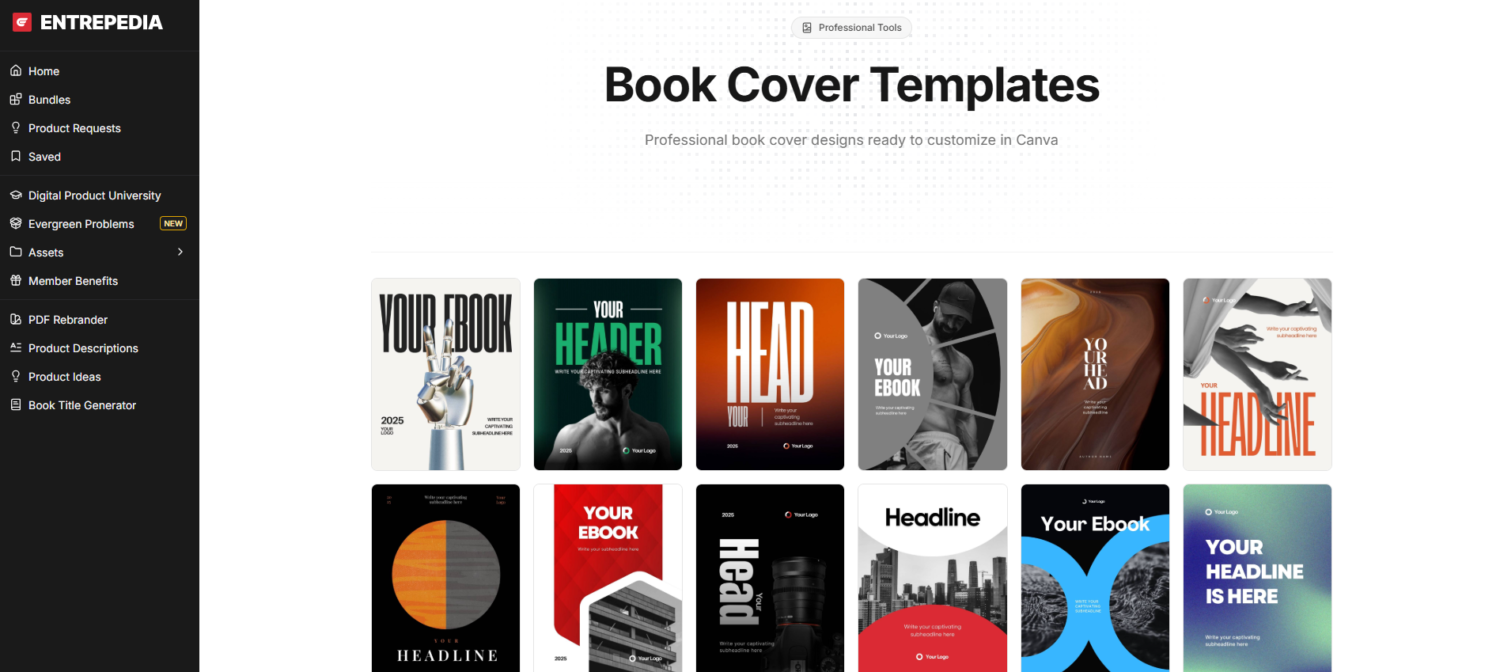
Entrepedia also includes tools that help you actually use the products, not just download them.
These include:
- Digital Product Ideator (generate product ideas)
- Book Title Generator
- Product Description Writer
- PDF Rebrander
- Revenue Calculator
These tools solve practical problems like:
- what to name your product
- how to position it
- how to present it
👉 So you’re not just getting content — you’re getting support around turning it into something usable.
Training (Digital Product University)
There’s also a built-in training section.
This covers:
- how to use the products
- how to build offers
- how to sell and structure your digital products
This is important because:
👉 Having products is one thing
👉 Knowing what to do with them is another
The training helps bridge that gap.
Licensing (Full Ownership)
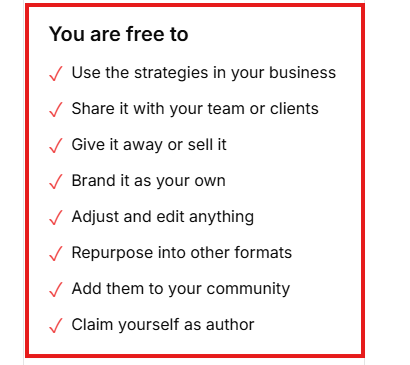
Every product comes with Private Label Rights (PLR).
Which means you can:
- sell it as your own
- edit and customize it
- rebrand it completely
- bundle it with other products
- give it away as a lead magnet
👉 And most importantly: you keep 100% of the profit
There are no royalties, no restrictions on usage.
The Big Picture
When you put all of this together, it becomes clear:
This isn’t just a content library.
👉 It’s a system designed to help you go from:
- no product
to - something you can actually launch and use
Without having to build everything from scratch.
What the Products Actually Look Like
Let’s look at what you actually get inside.
Because this is where most platforms fall apart. On paper, everything sounds good — “1,000+ products”, “multiple formats” — but the real question is:
👉 What do these products actually look like, and can you realistically use them?
I went through a few examples to see how they hold up.
Ebook – Building a Faceless Empire
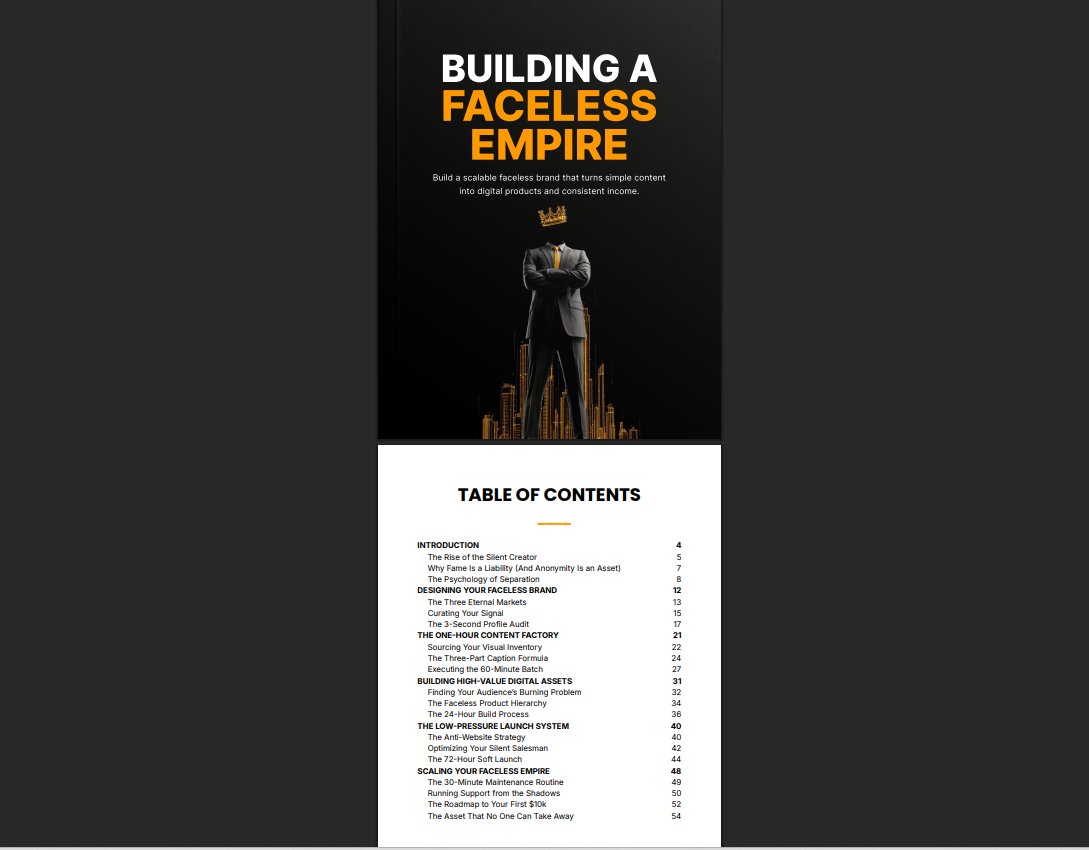
This is the first thing that stands out.
At a glance, it doesn’t feel like typical PLR. The cover looks clean, the title is strong, and overall it resembles something you’d expect from a paid product online.
Inside, it’s properly structured:
- clear sections
- logical flow
- frameworks and systems
There’s also a clickable table of contents, which might seem like a small detail, but it actually matters. It makes the product feel more polished and easier to navigate, especially if you’re giving it to users or customers.
The content itself is not just filler. It’s built around ideas, systems, and practical steps — not just surface-level information. You can see it’s designed to guide someone from understanding a concept to actually applying it.
Design-wise, it’s clean. There’s spacing, visual elements, and formatting that makes it readable. It doesn’t feel like a wall of text.
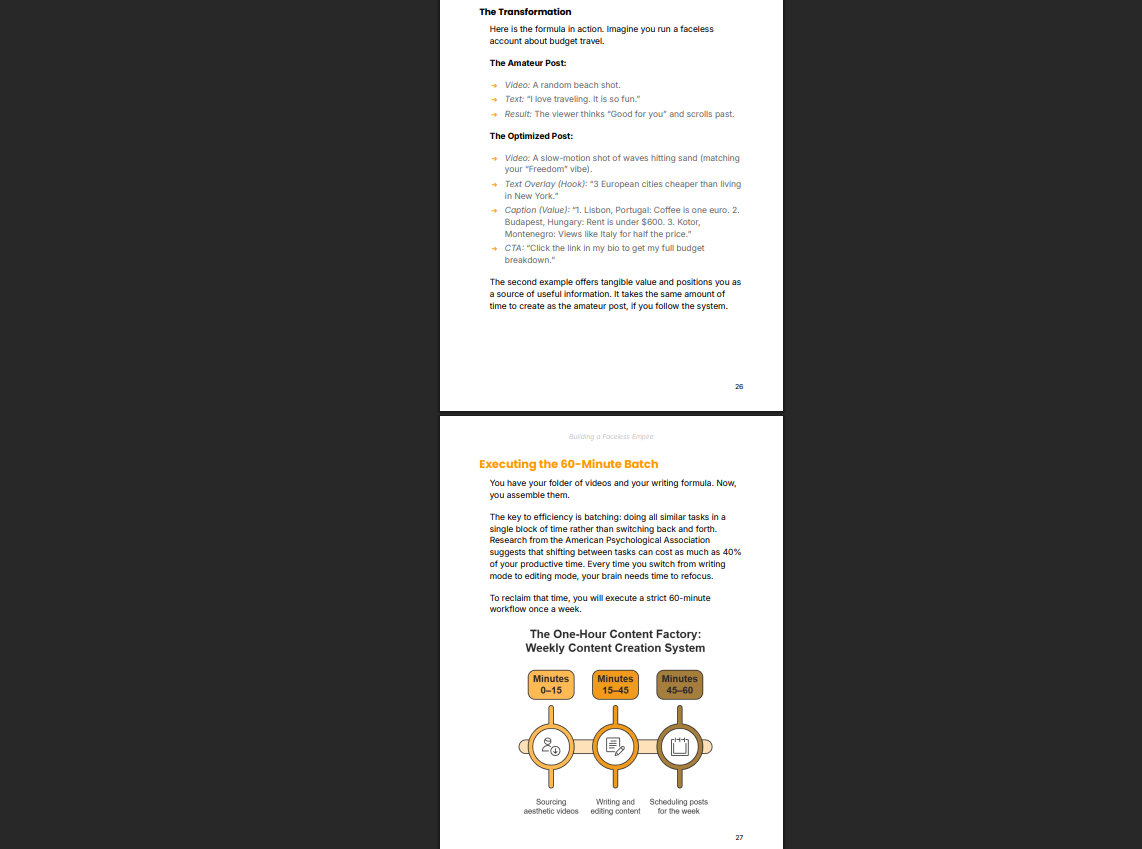
And this is the key point:
👉 You could realistically take something like this, make a few adjustments, and sell it.
Not as a placeholder, but as an actual product.
Workbook – Natural Energy Boost Workbook
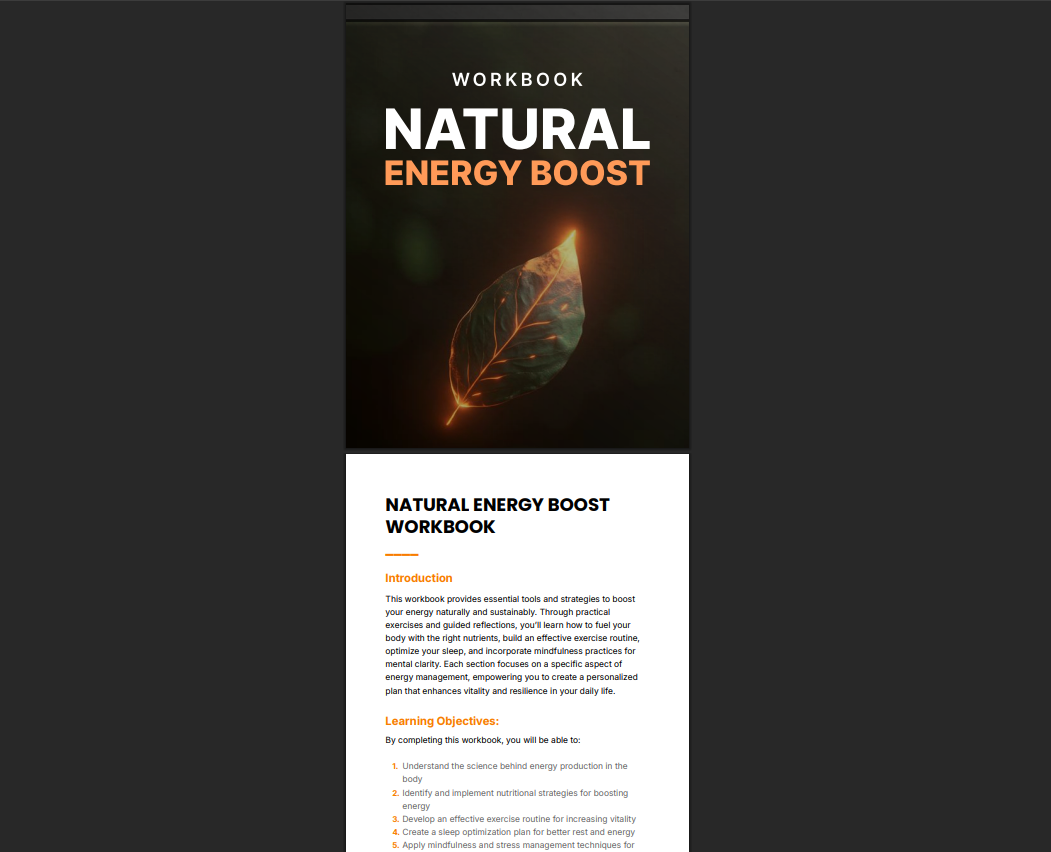
Now this is where things get more interesting.
The workbook is a completely different type of asset.
Instead of just reading, the user is expected to:
- answer questions
- fill in sections
- complete exercises
- reflect and apply
So it’s not passive content — it’s interactive.
You’ll see things like:
- guided prompts
- multiple choice sections
- real-life scenarios
- structured exercises
This makes it much more engaging.
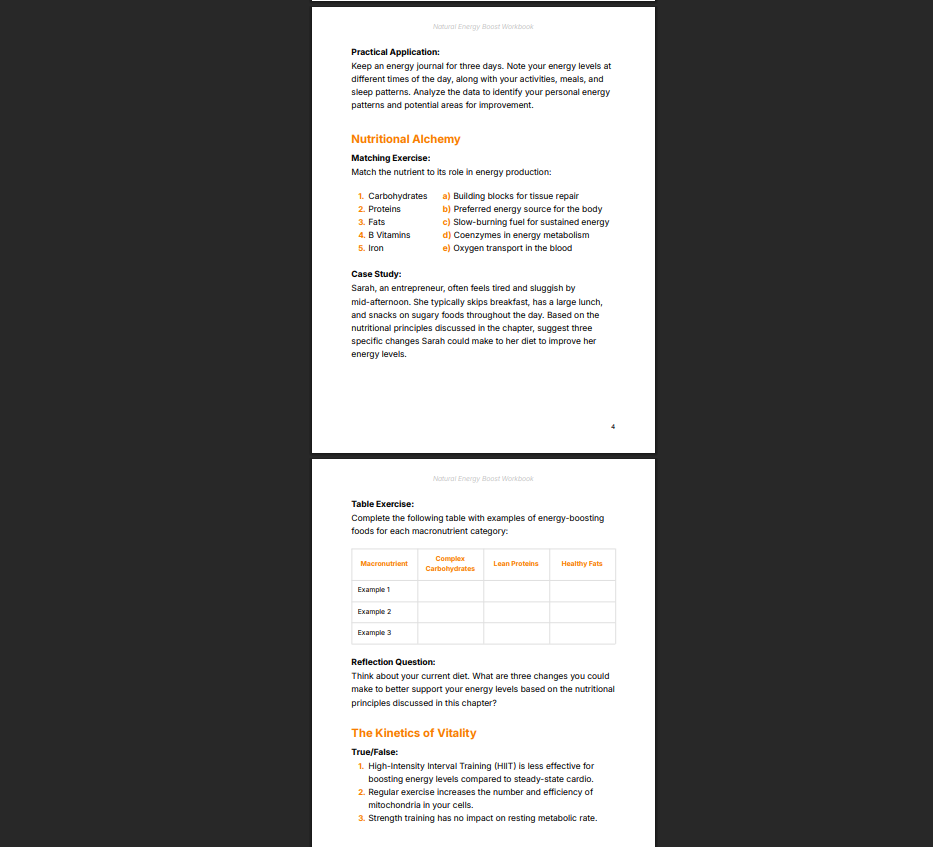
But more importantly, it adds a different layer to a product.
If the ebook gives someone the knowledge, the workbook is what helps them actually use it.
That’s why this type of asset works so well in:
- bundles
- courses
- coaching offers
On its own, it’s probably not something you’d sell as a main product. But combined with something else, it increases perceived value significantly.
👉 This is what makes a product feel complete.
Email Course – Start Engineering Your AI Prompts
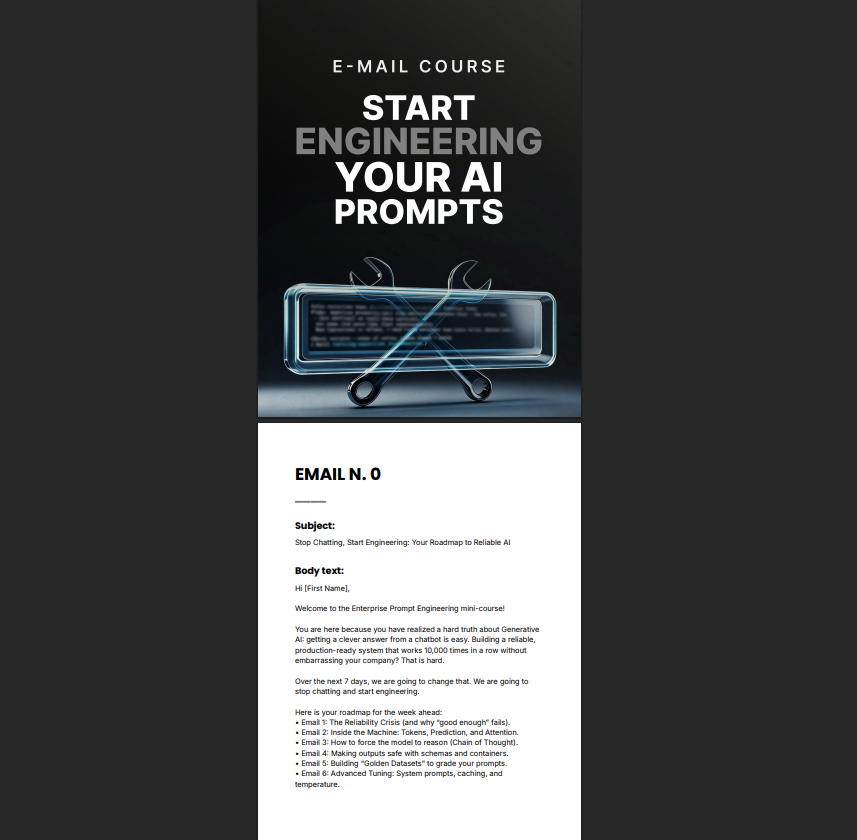
This one is less visual, but arguably just as important.
What you get here is a pre-written email sequence.
Each email includes:
- subject line
- structured message
- clear flow from one email to the next
And this is where the value shifts.
This isn’t really a “product” in the traditional sense.
👉 It’s a marketing asset.
Instead of figuring out:
- what emails to send
- how to structure them
- how to move someone toward a product
You’re starting with a sequence that’s already written.
You can take it, tweak it, and plug it into your email platform.
That’s useful for:
- lead nurturing
- onboarding
- promoting offers
- building trust over time
It’s not something that looks impressive on screen, but it solves a real problem — especially if you don’t want to write emails from scratch.
👉 This is what actually helps you sell.
Bringing It Together
When you look at these three together, a pattern starts to form.
- The ebook gives you something to sell
- The workbook helps people implement it
- The email course helps you promote and convert
And that’s where Entrepedia starts to make more sense.
You’re not just downloading random files.
👉 You’re building out parts of a system.
This is where it becomes clear — you’re not just getting files, you’re getting a system.
If you want to see how this works yourself, you can create a free account and download one product for free to test it.
How You Can Actually Use This
This is the part that matters most.
Because having access to products is one thing — knowing how to actually use them is what determines whether this makes you money or not.
Here are the main ways you can use what’s inside Entrepedia.
💰 Sell products
The most obvious option is selling.
You can take an ebook, make a few adjustments, add your branding, and list it as your own product. This can be on platforms like Gumroad, Shopify, or even your own website.
If you want to increase perceived value, you don’t just sell a single file.
You combine assets.
For example:
- ebook + workbook
- ebook + checklist + prompts
Now instead of selling a simple product, you’re selling a bundle — which feels more complete and justifies a higher price.
📩 Lead magnets
Another strong use case is lead generation.
Instead of creating a freebie from scratch, you can use one of these products as a lead magnet to grow your email list.
For example:
- offer an ebook as a free download
- use the workbook as a “bonus”
- follow up with the email course
This turns a simple product into a full funnel.
📦 Bundle offers
This is where things start to scale.
You’re not limited to one product. You can stack multiple assets together into a single offer.
- ebook → main product
- workbook → implementation
- email course → follow-up / conversion
Now you have something that feels like a full system, not just a file.
And you didn’t have to build everything yourself.
🎓 Coaching or courses
You can also use these materials inside:
- coaching programs
- online courses
- membership sites
Instead of creating all your content from scratch, you start with something already built and adapt it to your audience.
That alone can save a huge amount of time.
And this is really the core advantage:
👉 You can go from idea to product in a single day.
Not because everything is done perfectly for you — but because the hardest part, creating the foundation, is already handled.
Pricing
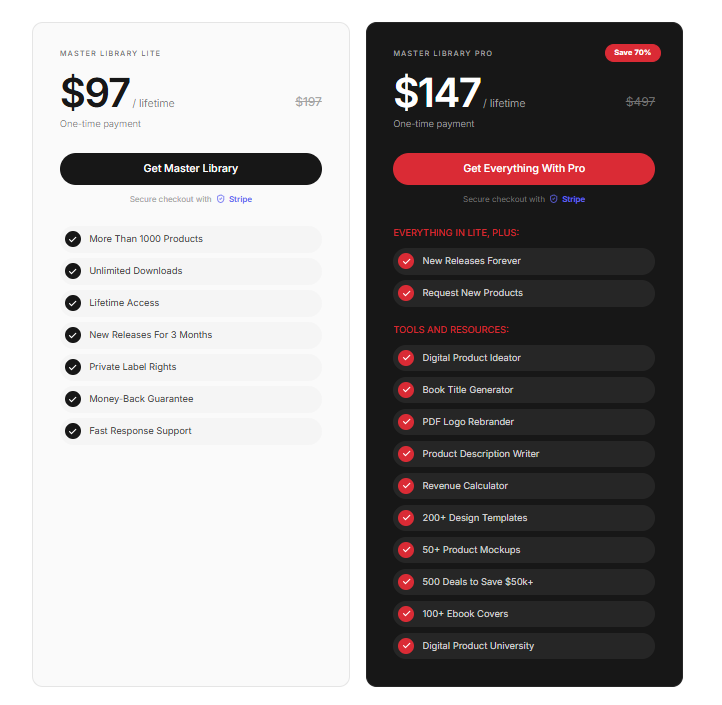
Entrepedia keeps the pricing relatively simple.
There are two main options:
- Lite plan – one-time payment
- Pro plan – slightly higher one-time payment
Both give you access to the product library with Private Label Rights, meaning you can download, edit, and use the products as your own.
The main difference comes down to access and features.
With the Lite plan, you get:
- access to the core library
- unlimited downloads
- but limited updates (typically a few months)
With the Pro plan, you get:
- lifetime updates
- access to all tools (ideator, rebranding, etc.)
- ability to request new products
So Pro is essentially the full system, while Lite is more of a basic entry point.
The important part here is:
👉 this is a one-time payment, not a subscription.
You’re not paying monthly to keep access. Once you’re in, you keep what you get.
From a value perspective, it’s positioned as low risk.
You’re getting access to a large library of products that you can reuse multiple times, across different offers, without additional costs.
So instead of paying per product or hiring someone to create content, you’re paying once and leveraging it repeatedly.
Pros & Cons
Like any platform, Entrepedia has strengths and limitations. The key is understanding what it actually does well — and where you still need to put in some work.
✅ Pros
The biggest advantage is simple:
👉 you don’t need to create products from scratch.
That alone removes one of the biggest bottlenecks. Instead of spending weeks writing, designing, and structuring something, you’re starting with something already built.
That leads directly to speed.
You can realistically take a product, customize it, and have something ready to use the same day. Whether that’s for selling, lead generation, or building an offer — the time-to-launch is significantly shorter.
Another strong point is ownership.
You get full rights to the products, which means you can edit, rebrand, bundle, and sell them while keeping 100% of the profit.
On top of that, the platform isn’t limited to just one format. You’re working with ebooks, workbooks, email sequences, and more — which makes it easier to build complete offers instead of relying on a single asset.
And finally, the one-time payment model makes it straightforward. You’re not locked into a subscription, and you can reuse the products as many times as you want.
⚠️ Cons
That said, there are a few things to be aware of.
The products are not fully unique. Other users have access to the same library, so if you plan to sell them, you’ll want to customize them to stand out.
That leads to the second point — some level of editing is still needed. While the foundation is there, you’ll get better results if you adjust branding, positioning, or specific sections.
And lastly, this isn’t a complete business on its own. You still need a platform to sell, a way to get traffic, and a basic setup to make everything work.
👉 It’s not a magic button — but it removes the hardest part.
Final Verdict
Entrepedia makes the most sense for people who want to skip the hardest part of building a digital product — creating it from scratch.
If you’re trying to:
- launch products faster
- build lead magnets
- create offers without spending weeks on content
then this is a very practical solution.
It gives you a starting point that’s already structured, designed, and usable.
That said, it’s not for someone looking for a completely hands-off business. You still need to customize, position, and actually use what you download.
👉 If you’re willing to do that part, this becomes one of the fastest ways to go from idea to product.
Get Access
If you want to see how this actually works, you can create a free account and test it yourself.
You’ll be able to download one product and check the quality from the inside before committing to anything.
👉 Create your free account here and try your first product yourself.